Porcelain paving is hard wearing, low maintenance and stain resistant with a precise modern finish, while natural sandstone is warmer, more characterful and usually cheaper up front but needs sealing and more upkeep. Both work beautifully on a properly built base. This guide compares them on looks, maintenance, cost and lifespan so you can choose the right patio for your garden.
Porcelain and natural sandstone are the two paving materials we are asked about most for Surrey gardens, and both make an excellent patio. They simply suit different homeowners. Porcelain is a manufactured tile with a precise, modern finish and very little upkeep, while sandstone is a natural stone with warmth and character that costs less up front but asks for a bit more looking after. Below we go through how they compare on the things that actually matter, and then the one point that outweighs the choice of material itself: the base underneath.
Looks and Finish
The right material is partly about your home and partly about the look you are after.
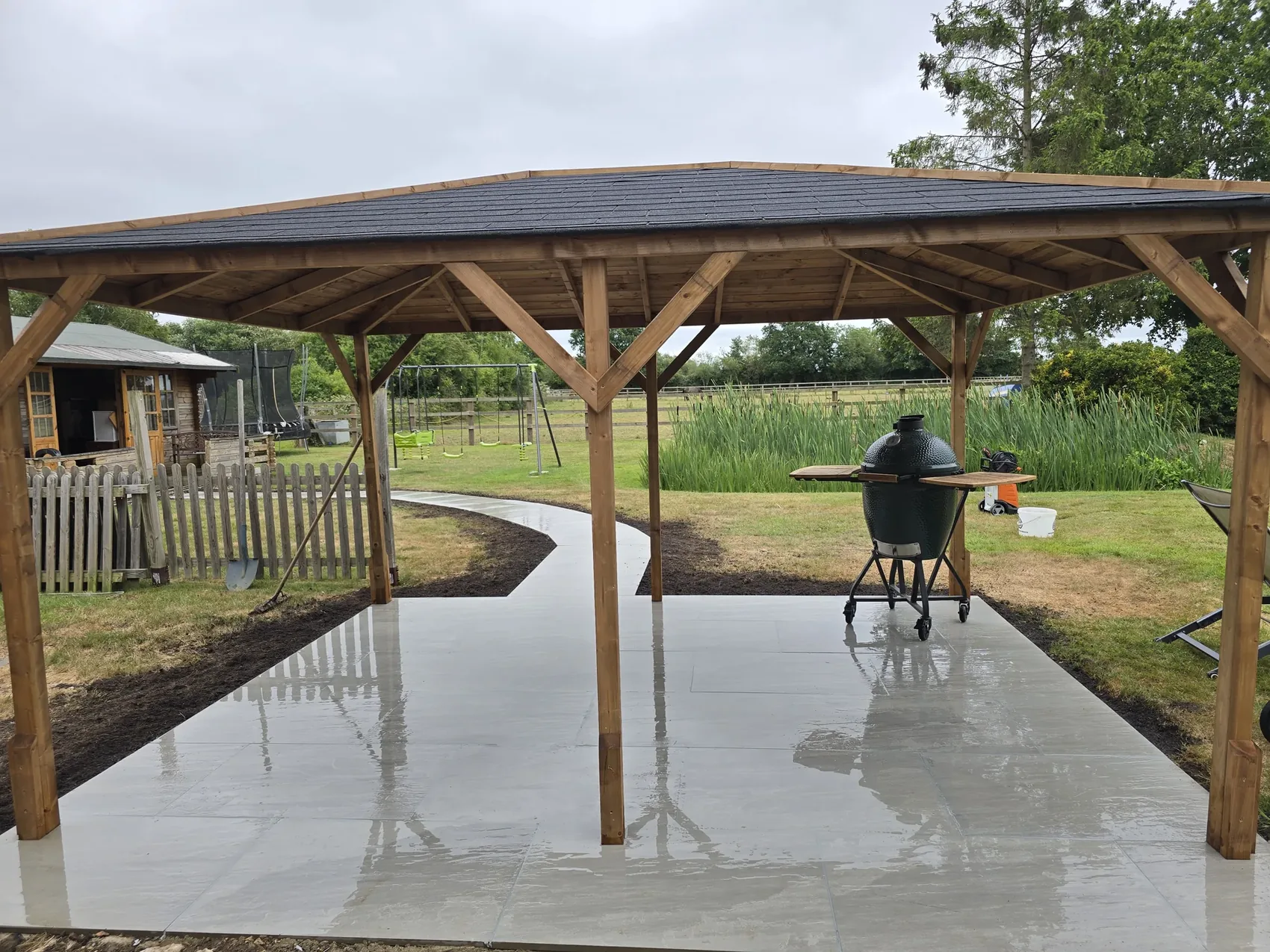
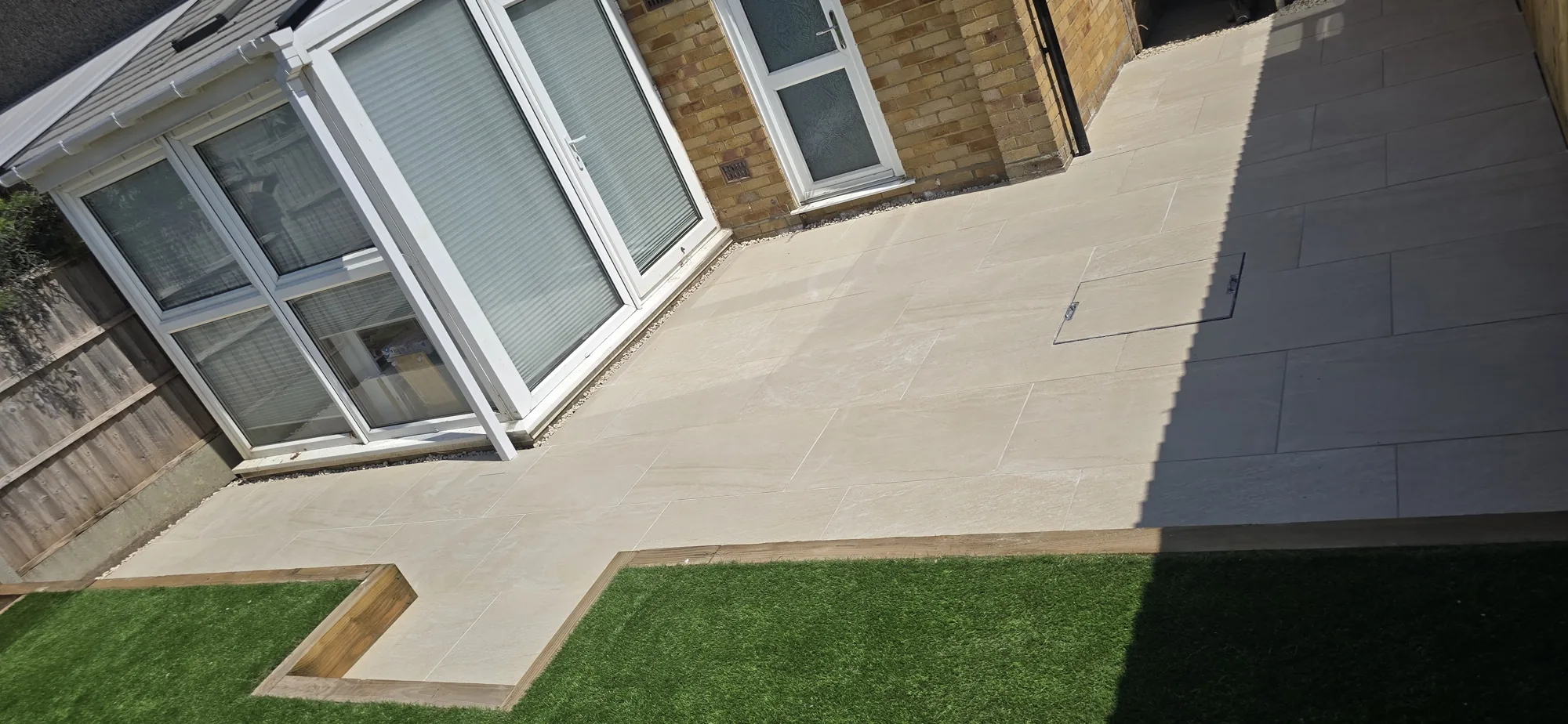
- Porcelain: Manufactured to consistent sizes and colours, so slabs are uniform with crisp, narrow joints and a flat, contemporary finish. Colours stay true and do not fade in sunlight. It suits modern extensions, rendered houses and clean, minimal garden designs, and is available in convincing wood-effect and stone-effect looks as well as plain greys and creams.
- Natural sandstone: Every slab is slightly different in tone and texture, which gives a softer, more traditional look that sits well against brick and period homes. The natural riven surface and colour variation are exactly what many people want. The trade-off is that no two slabs are identical, so you accept some variation across the patio.
Maintenance and Sealing
This is where the two materials differ most, and it is worth being honest about it before you decide.
- Porcelain: Because it is dense and non-porous, it does not absorb water or stains and never needs sealing. A wash down with warm water and a stiff brush keeps it looking new, and spilled wine, oil or barbecue grease wipes off rather than soaking in. It also resists moss and algae better than natural stone.
- Natural sandstone: Being porous, sandstone will take on stains and grow moss or algae in shaded, damp spots if it is left. It benefits from sealing after installation and re-sealing every few years, plus an occasional clean. None of this is difficult, but it is ongoing, and it is the main reason some people choose porcelain instead.
Planning a New Patio?
Call Siviter Projects on 07588 688687. We provide free quotes and honest advice on patios across Chobham and the wider Surrey area.
Call for a Free QuoteCost
Both the material and the labour feed into the final price, so it is worth understanding where the money goes.
- Material: Natural sandstone is usually cheaper to buy than porcelain, which is why it remains popular for larger patios on a tighter budget. Porcelain costs more per square metre but you are paying for a product that stays looking new with almost no upkeep.
- Laying: Porcelain takes more skill and time to lay well. It needs a primer or slurry on the back of each slab to bond to the mortar, and precise cutting with the right blade, so the labour is higher. Sandstone is more forgiving to lay.
- Over time: Porcelain often works out closer than it first looks once you factor in years of no sealing and less cleaning. Sandstone wins on the day you pay the bill, porcelain narrows the gap over the life of the patio.
Whichever you choose, we give you a clear fixed quote after seeing the space, so there are no surprises.
Durability and Slip Resistance
Both materials will comfortably outlast a poorly built patio in any material, but there are differences worth knowing.
- Durability: Porcelain is extremely hard, scratch resistant and frost proof, and it does not chip or wear easily. Good quality sandstone is also hard wearing and long lasting, though softer stone can weather over many years. Both are fine for a British climate when laid properly.
- Slip resistance: This is often misunderstood. Textured, riven sandstone has natural grip. Modern outdoor porcelain is made with a slip-resistant surface rated for external use, so it is not the skating rink some people fear, but you should always specify an outdoor-grade porcelain rather than a smooth indoor tile. We only fit external-rated porcelain for exactly this reason.
Why the Base Matters Most
Here is the part that matters more than porcelain versus sandstone: the base. A patio in the finest material will still sink, crack and pool water if the groundwork underneath is wrong, and a patio in modest paving will stay flat and true for years if the base is right. It is the step cheaper installers cut, and the most common reason a patio fails early.
- Excavate to the right depth: We dig out to allow for the sub base, the mortar bed and the slab, so the finished level sits correctly against your house and below the damp proof course.
- Type 1 MOT sub base: We lay and compact a Type 1 sub base to around 150mm. Compacting it in layers with a plate is what gives the patio a solid, stable foundation that will not settle unevenly.
- Full mortar bed: Every slab is bedded on a full sand and cement mix, not on five dabs or spots. A full bed leaves no voids for water to sit in, which prevents the rocking, cracking and frost damage that spot-bedding causes.
- Falls and drainage: We set a slight fall across the patio so surface water runs away from the house, and build in drainage where needed. Get this right and the surface stays dry and safe.
Choose the material you love the look of, then make sure whoever lays it builds the base properly. That combination is what gives you a patio to be proud of for the long term.
Frequently Asked Questions
Both cope well with our weather when laid properly. Porcelain is frost proof and needs no sealing, which suits people who want a low maintenance, modern finish. Sandstone gives a warmer, traditional look that sits well against brick and period homes, in return for a little more upkeep. It comes down to the look you want and how much maintenance you are happy to do.
No. Porcelain is dense and non-porous, so it does not absorb water or stains and never needs sealing. A wash with warm water and a brush keeps it looking new. Natural sandstone, being porous, does benefit from sealing after installation and re-sealing every few years.
Outdoor-grade porcelain is made with a slip-resistant surface rated for external use, so it is safe underfoot in the rain. The key is to specify external porcelain rather than a smooth indoor tile. We only fit external-rated porcelain for patios, so slip resistance is built in.
The best paving in the world will still sink, rock and crack if it is laid on a poor base. A compacted Type 1 sub base and a full sand and cement mortar bed under every slab are what keep a patio flat, stable and free draining for years. It is the step cheaper installers cut, and it is the most common cause of a patio failing early, so it is the part we never compromise on.