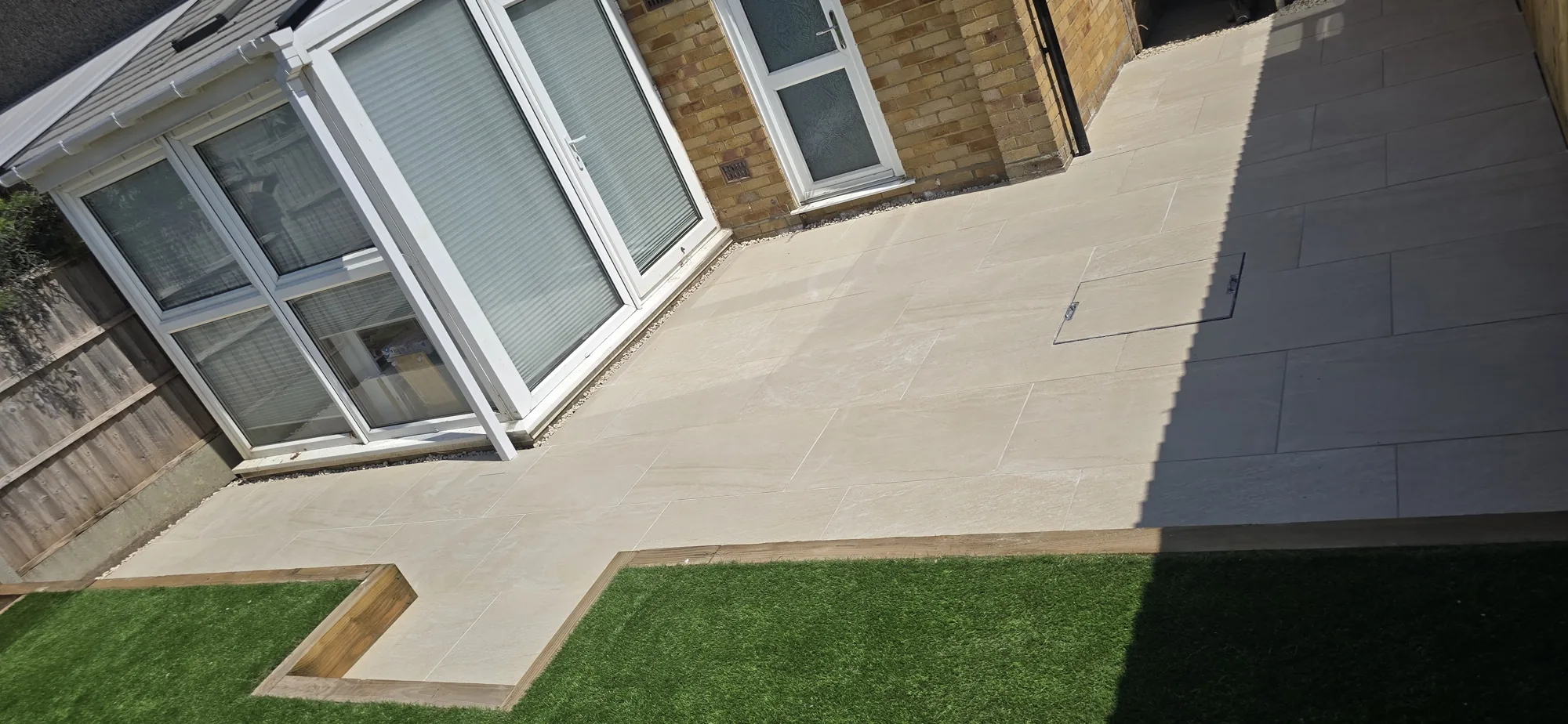
Resin bound driveways give a clean, permeable, low maintenance finish; block paving is hard wearing and classic but can need occasional re-levelling; shingle is the most cost effective and traditional but needs topping up. All three need a properly compacted, well drained base. This guide compares them on cost, drainage, maintenance and looks.
A new driveway is one of the first things people see when they arrive at your home, and it is a surface that has to carry real weight day in, day out. Resin bound, block paving and shingle are the three surfaces we install most across Surrey, and each has genuine strengths. The right one for you depends on your budget, how the drive looks against your house, how much maintenance you want, and how you plan to deal with rainwater. Here is how they stack up.
The Three Surfaces
Before comparing them point by point, it helps to know what each surface actually is.
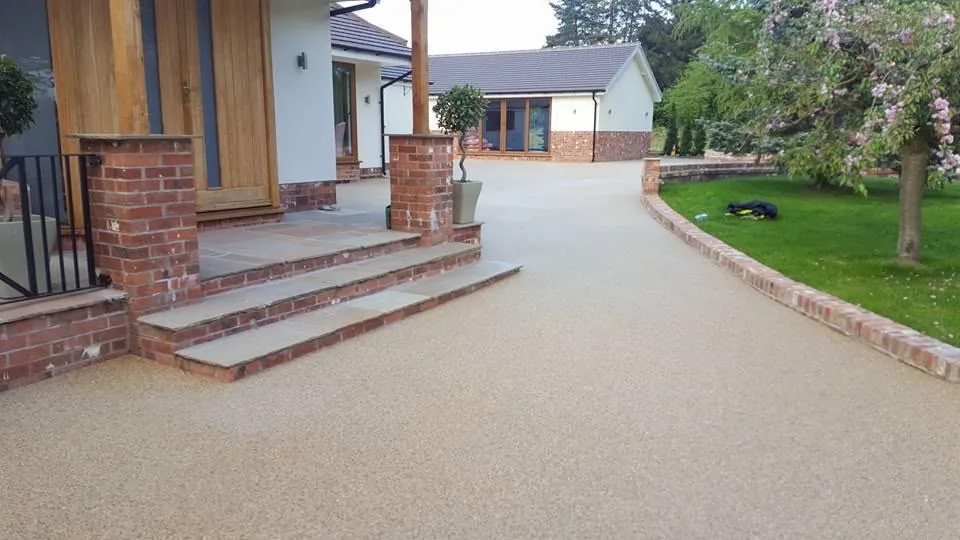
- Resin bound: Natural aggregate mixed with a clear resin and trowelled onto a solid base to give a smooth, seamless finish. It is permeable, low maintenance and looks clean and modern, and it comes in a wide range of stone colours.
- Block paving: Individual clay or concrete blocks laid in a pattern on a prepared base and locked in with kiln-dried sand. It is a classic, hard wearing look with huge choice of colours, shapes and laying patterns.
- Shingle (gravel): Loose decorative stone laid over a base and membrane, edged to keep it contained. It is the most cost-effective and traditional finish, and it suits country and cottage-style homes particularly well.
Cost
Budget is often the starting point, and there is a clear order here.
- Shingle: The cheapest to install, because the material is inexpensive and it goes down quickly once the base is prepared. A good option if you want a big area covered for less.
- Block paving: Usually mid-range. The blocks themselves are affordable, but laying them is labour intensive, especially with borders and patterns, which is where the cost sits.
- Resin bound: Typically the most expensive per square metre, as it needs a strong, solid base and a skilled finish. You are paying for a low maintenance surface that stays looking smart with very little effort.
Whichever surface you choose, we give you a clear fixed quote up front, with the groundworks and drainage priced in rather than added later.
Drainage and SuDS Rules
Drainage is not just practical, it is a planning matter, and it often steers the decision. Since 2008, if you pave over a front garden with a traditional impermeable surface and the area is more than five square metres, you generally need planning permission unless the surface is permeable or the water is directed to a border or soakaway within your property rather than running onto the road. This is part of what people mean by SuDS, sustainable drainage.
- Resin bound: Permeable by nature, so rainwater soaks straight through into the base below. On a suitable sub base this usually satisfies the drainage rules without extra planning, which is a big part of its appeal.
- Shingle: Also naturally permeable, letting water drain through the stone into the ground, so it too tends to meet the rules.
- Block paving: Standard block paving is impermeable, so surface water has to be managed. That means either laying to a fall toward a border, soakaway or channel drain, or choosing a permeable block paving system laid on a permeable sub base. We plan this in from the start so your driveway complies and water runs away from the house, not toward it.
Maintenance and Lifespan
How much looking after each surface needs, and how long it lasts, varies quite a bit.
- Resin bound: Very low maintenance. An occasional sweep and a wash keep it clean, and there are no loose stones to scatter and no weeds through the surface. Laid well on a sound base, it has a long service life.
- Block paving: Hard wearing and long lasting, and individual blocks can be lifted and replaced if one is ever damaged or stained, which no other surface allows. In return it can need occasional attention: topping up the jointing sand, treating weeds in the joints, and re-levelling a section if the base ever settles.
- Shingle: The most hands-on. Stone migrates with use and needs raking level and topping up over time, and a weed membrane underneath helps but does not eliminate weeding. Edging is essential to keep it in place.
Planning a New Driveway?
Call Siviter Projects on 07588 688687. We provide free quotes and honest advice on driveways across Chobham and the wider Surrey area.
Call for a Free QuoteWhy the Sub Base Matters
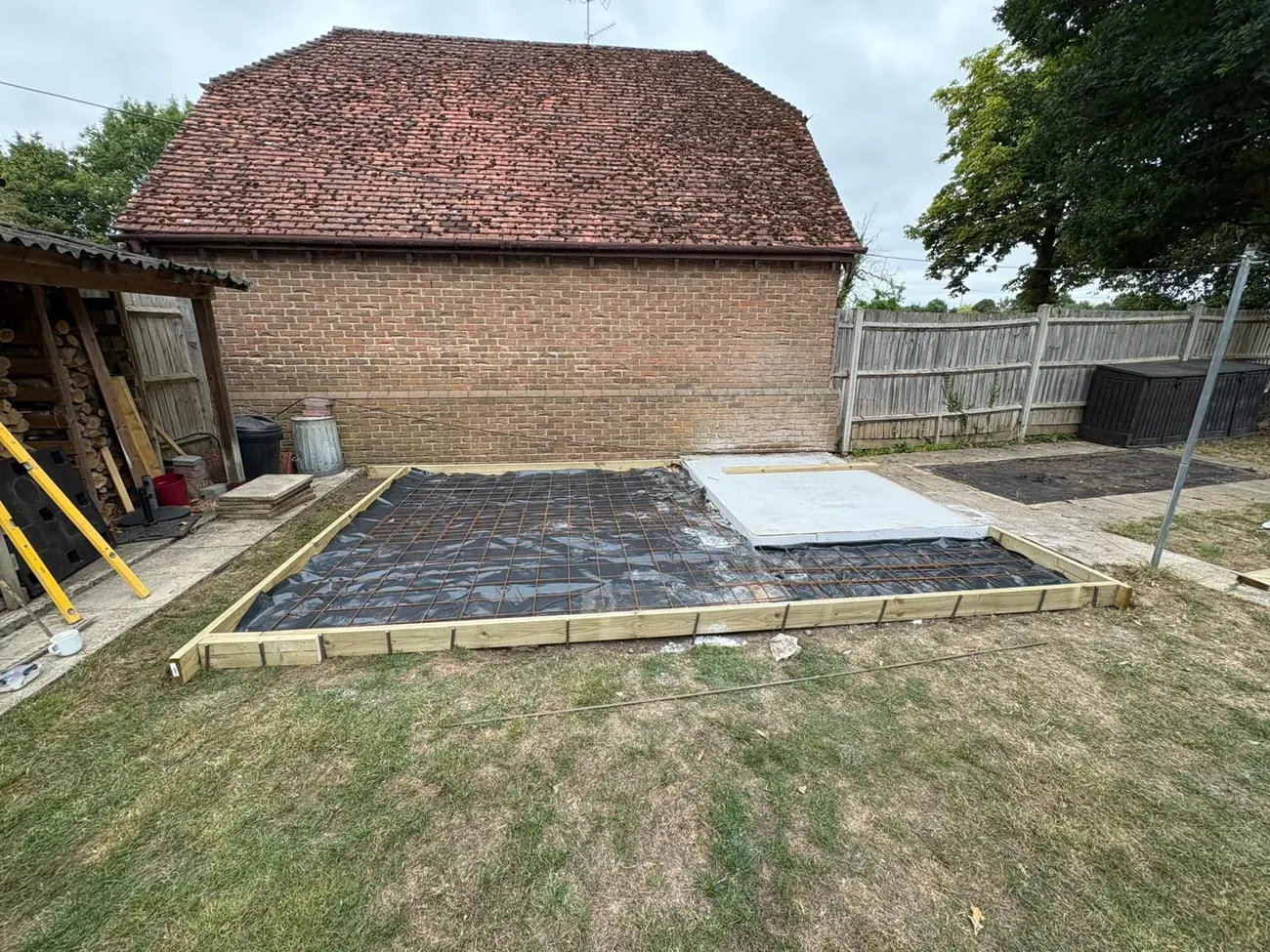
Whatever surface you pick, it is only as good as the ground it sits on. A driveway carries the weight of vehicles every day, so the sub base does the real work, and it is the step where corners get cut. Get it right and any of these three surfaces will last for years. Get it wrong and even the most expensive resin will crack, sink or spread.
- Excavate to the right depth: We dig out enough to allow for a proper sub base plus the surface, so the finished level is correct and the drive is strong enough for vehicles rather than just foot traffic.
- Compact a strong sub base: We lay and compact the sub base in layers with a plate or roller. Compaction is what stops the driveway settling unevenly and rutting under the weight of cars over time.
- Edge it properly: Every driveway is edged and restrained, whether with block-paved kerbs or edging, so the surface cannot spread or creep outward. This is especially vital for shingle and block paving.
- Set the falls and drainage: We set the levels and falls so water drains where it should, using permeable surfaces, channel drainage or a soakaway to meet the rules and keep water away from your home.
Choose the surface that suits your home and budget, then make sure the groundwork underneath is done properly. That is what turns a good-looking driveway into one that stays that way.
Frequently Asked Questions
Shingle is generally the most cost-effective to install, as the material is inexpensive and it lays quickly once the base is prepared. Block paving usually sits in the middle, and resin bound tends to be the most expensive because it needs a solid base and a skilled finish. Remember that the groundwork is a real part of the cost with any surface.
If you are paving a front garden over five square metres with a traditional impermeable surface, you generally need planning permission unless the surface is permeable or the water drains to a border or soakaway within your own property. Permeable resin and shingle usually avoid this, and impermeable block paving can be managed with the right drainage. We plan the drainage so your driveway complies.
Resin bound is the lowest maintenance of the three. It has no loose stones to scatter and no joints for weeds, so an occasional sweep and wash keep it looking smart. Block paving is hard wearing but can need jointing sand topped up and weeds treated, and shingle needs raking level and topping up over time.
A driveway carries the weight of vehicles every day, so the base does the real work. A properly excavated, compacted and edged sub base is what stops the surface sinking, rutting or spreading, no matter which finish sits on top. It is the step cheaper installers skimp on, and the most common reason a driveway fails early, so it is the part we never cut corners on.